THE GUIDE / growing
Keep a polytunnel growing diary you can use next season
A simple growing diary with a bed map, a reusable record table and a worked example for turning observations into next season's questions.
A useful polytunnel diary connects a dated observation to a particular bed or container. Give each growing area a name, record what you actually did, and leave enough detail to understand the entry later. Use a notebook, a spreadsheet or a folder of labelled photographs: choose the format you are likely to keep using.
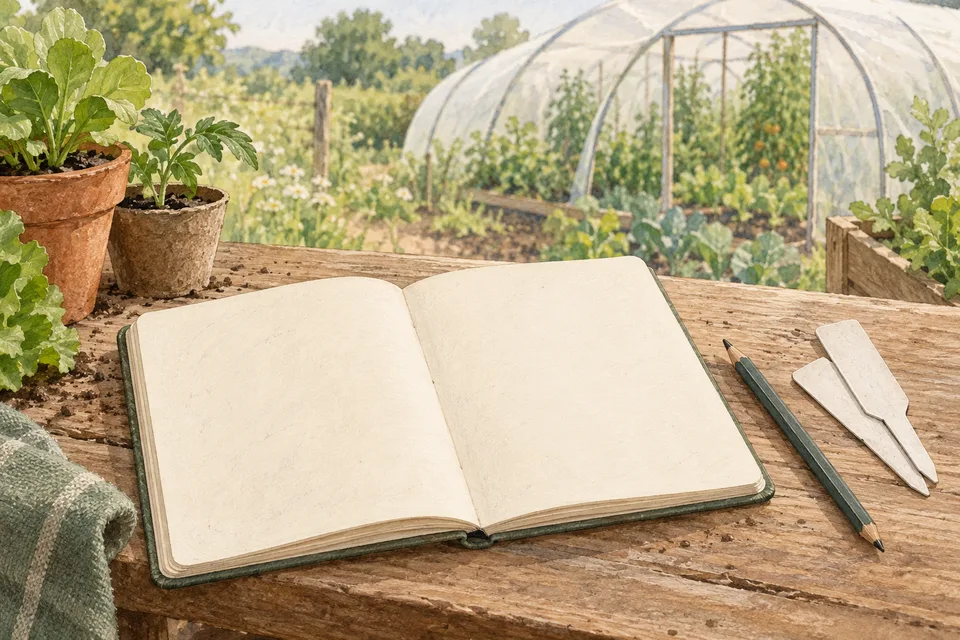
Start with the question you want the diary to answer. “Which variety was in the left-hand bed?” needs a label and planting record. “How much did I harvest?” needs a consistent way to record quantities. Trying to record everything can leave you with a complicated sheet you stop using.
Give the diary a map
Draw the tunnel as you see it from the entrance. Label beds A and B, number containers if necessary, and mark which end is the door. Keep those names for the season, even if you change what grows there. Date a new sketch when the arrangement changes rather than overwriting the old one.
Add dimensions if they matter to your plans. The polytunnel size calculator can draw a rectangular bed-and-path layout, and the planting planner can count a grid from spacing you supply. Keep the inputs with the drawing. A count alone will not tell you which dimensions or spacing produced it.
Make a short crop record for each planting: the name as printed on the packet or label, the variety where known, its location, and the dates of actions you want to track. Photograph the packet if that is easier than transcribing it. If a variety name is missing, write “unknown” rather than guessing later.
Use one small table for each visit
Copy this table into your chosen diary. You can leave cells blank when they are irrelevant; a blank quantity is more honest than an estimate presented as a measurement.
| Field | What to record |
|---|---|
| Date and time | When you visited |
| Location and crop | Bed or container label; variety if known |
| Observation | What you saw or measured, with units |
| Action taken | What you changed or did |
| Follow-up or reference | A question to revisit; photo or packet reference |
Keep observations separate from actions. “Three plants have pale leaves” records something you saw. “Added feed” records something you did. Combining them into “plants needed feeding” inserts a diagnosis that the entry may not support.
If you record measurements, include units and enough context to interpret them. For a temperature reading, include the unit, identify the thermometer and note where it was positioned. The visit date and time tell you when the reading was taken. A note saying only “warm” may still describe your impression, but it cannot stand in for a measured temperature.
A filled-in example
These entries are fictional illustrations of the record format. The dates and actions are not a growing schedule or a recommendation for any crop.
8 May, 10:00 — container C3. The variety label is unreadable. A photograph shows the remaining text. Replaced the location label with C3 and left the variety as unknown. Reference: photo C3-08May.
15 May, 17:00 — Bed A. Two plants beside the entrance have pale lower leaves. Photographed both plants. No treatment applied. Follow-up: compare the same plants on the next visit. Reference: photo A-15May; crop name on the bed sheet.
22 May, 16:30 — Bed A. Pale leaves still visible on the same two plants; one new leaf visible on each. Added dated photographs. Cause remains unknown. Reference: photo A-22May.
The last entry does not establish why the plants changed. It does let you find the earlier photographs, locate the same plants and see what was recorded between visits. That is a more useful starting point for further investigation than a later recollection that “Bed A struggled”.
Keep quantities comparable
Choose how you will record a harvest before combining entries. If some are weighed and others counted, keep the two types separate. Record “four items” as a count; do not silently convert it into a weight.
When adding figures, preserve their scope. A total for one container is not a total for a whole bed. If you missed visits or only recorded some harvests, label the result “recorded harvest” and note the gaps. A tidy total should not suggest more complete information than you collected.
Attach photographs by filename or date. A folder full of similar images becomes easier to use when the diary says which plant, bed and visit each one belongs to.
Turn the record into next season's questions
At the end of your chosen period, read one growing area at a time. Note what you can establish from the record, then write what remains uncertain. You might know exactly which variety occupied Bed B while having too few measurements to compare it with Bed A.
Before comparing two records, check whether they differ in variety, planting date, location, care or the completeness of the notes. Describe a difference without declaring its cause. One season's diary is a record of that season, not proof that a particular action will produce the same result again.
Finish with a short list of questions for your next plan: a missing variety label to resolve, a quantity to record consistently, or an arrangement to draw more clearly. If the question concerns bed space, compare two layout drawings and keep the chosen dimensions with the new diary. Keep crop recommendations and diagnoses separate from the observations you have actually collected.
Use a blank worksheet
Download a CSV template to edit in your spreadsheet app. These files do not calculate totals or choose growing requirements.
- Growing diary CSV
A blank dated observation and action record with measurement context.